Heimlich Lab

Studying how acquired mutations contribute to cardiovascular disease.

Scroll to explore

About the Lab

Working at the intersection of immunology, genomics, and cardiovascular medicine — asking how acquired mutations in blood stem cells shape the fate of cardiovascular disease.

The Heimlich Lab studies clonal hematopoiesis of indeterminate potential (CHIP) as a driver of cardiovascular disease. We investigate how somatic mutations in blood stem cells — particularly in TET2 and DNMT3A — promote vascular inflammation and accelerate atherosclerosis, with an eye toward clinical translation.

We run the CATCH study, a prospective longitudinal cohort and biorepository based at VUMC that identifies CHIP patients. Dr. Heimlich directs the Southeast's only dedicated cardiovascular CHIP clinic. Patients seen in clinic directly inform our research questions, and our findings shape how we care for them.

We also work in cardio-oncology, using large-scale biobanks and national clinical databases to study CHIP in cancer patients and survivors — a population with particularly high cardiovascular risk.
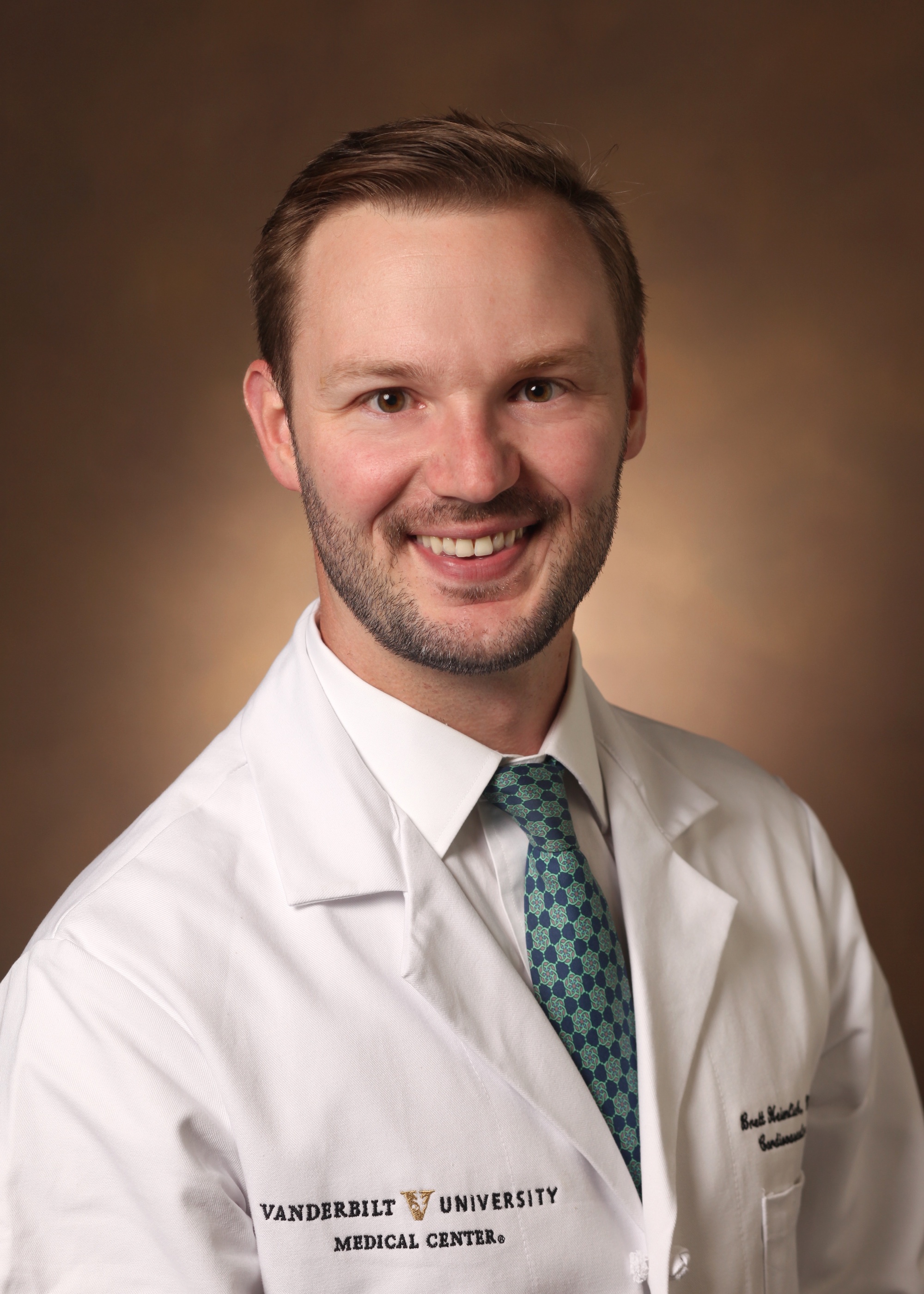
Dr. J. Brett Heimlich
Principal Investigator · Assistant Professor of Medicine

MD/PhD (Physiology, Medical College of Georgia). Postdoctoral fellow in the Bick Laboratory at VUMC. Medicine, Cardiology and Cardio-Oncology training at VUMC. Assistant Professor at VUMC, Staff Cardiologist, Nashville VA Hospital.

Physician-Scientist Cardiology Physiology Genomics VUMC · Nashville VA

Research Programs

Four research programs.
One central question.

TET2 & DNMT3A
Mutation Biology

TET2 loss-of-function is the most common CHIP variant and our primary focus — examining how it reprograms myeloid cell behavior to promote atherosclerosis through epigenetic dysregulation and altered gene expression, using single-cell multi-omics.

Epigenetics
& Mutation Biology

MIF Signaling &
Vascular Inflammation

We identified macrophage migration inhibitory factor (MIF) as a central driver of TET2 CHIP-mediated atherosclerosis and hold a US patent on MIF inhibition as a therapeutic strategy. Ongoing work targets the monocyte-endothelial interface as a node of CHIP-driven vascular disease.

Inflammation
& Signaling

Methylation-Based
Clonal Tracking

Through the CHIVE study, we track clonal dynamics longitudinally using methylation sequencing — a more precise measure of clonal burden than variant allele frequency — linking expansion trajectories to cardiovascular outcomes over time.

Clonal Dynamics
& Sequencing

Cardio-Oncology
Research

Cancer patients carry among the highest CHIP burdens of any population. Using national biobanks and EHR data, we study how CHIP amplifies cardiovascular risk after cancer therapy — including published work in JAMA Oncology (2026) on outcomes after solid tumor treatment.

Cardio-Oncology
& Epidemiology
Single-Cell Multi-Omics NanoSeq Olink Proteomics Single-Cell RNA Sequencing Methylation Sequencing National Biobanks & EHR Databases Patient-Based Clinical Studies Preventive Cardiology Cardio-Oncology Single-Cell Multi-Omics NanoSeq Olink Proteomics Single-Cell RNA Sequencing Methylation Sequencing National Biobanks & EHR Databases Patient-Based Clinical Studies Preventive Cardiology Cardio-Oncology

Cardiovascular CHIP Clinic

The Southeast's only clinic dedicated to the cardiovascular care of patients with clonal hematopoiesis.

Most patients with CHIP are identified incidentally — without a clear pathway to specialized cardiovascular follow-up. Our clinic at VUMC fills that gap. Dr. Heimlich evaluates patients with known or suspected CHIP, offering comprehensive cardiovascular risk assessment and longitudinal management. Patients seen in clinic may enroll in the CATCH study, creating a direct connection between clinical care and scientific discovery.

The Team

People & Open
Positions

A multidisciplinary team united by curiosity and a commitment to translational discovery.

Postdoctoral Fellow

Backgrounds in genomics, computational biology, cardiovascular biology, or hematology. Strong interest in translational science.

Now Recruiting
Graduate Student

Accepting rotation students from Vanderbilt graduate programs. Reach out to discuss.

Rotations Welcome

Join the Heimlich Lab

Interested in working at the
intersection of blood and heart?

We are recruiting postdoctoral fellows, graduate students, and research staff with backgrounds in genomics, cardiovascular biology, computational biology, or clinical research. Active NIH and VA funding, strong mentorship, and a direct clinical connection through the CATCH study and VUMC cardiovascular CHIP clinic. Reach out to learn more.

Location & Contact

Find
the Lab

Office

560A Robinson Research Building
Nashville, TN 37232